
America’s Witness Trees
Roots of America’s Story
Iconic trees give testament to America’s spirit of endurance and renewal.
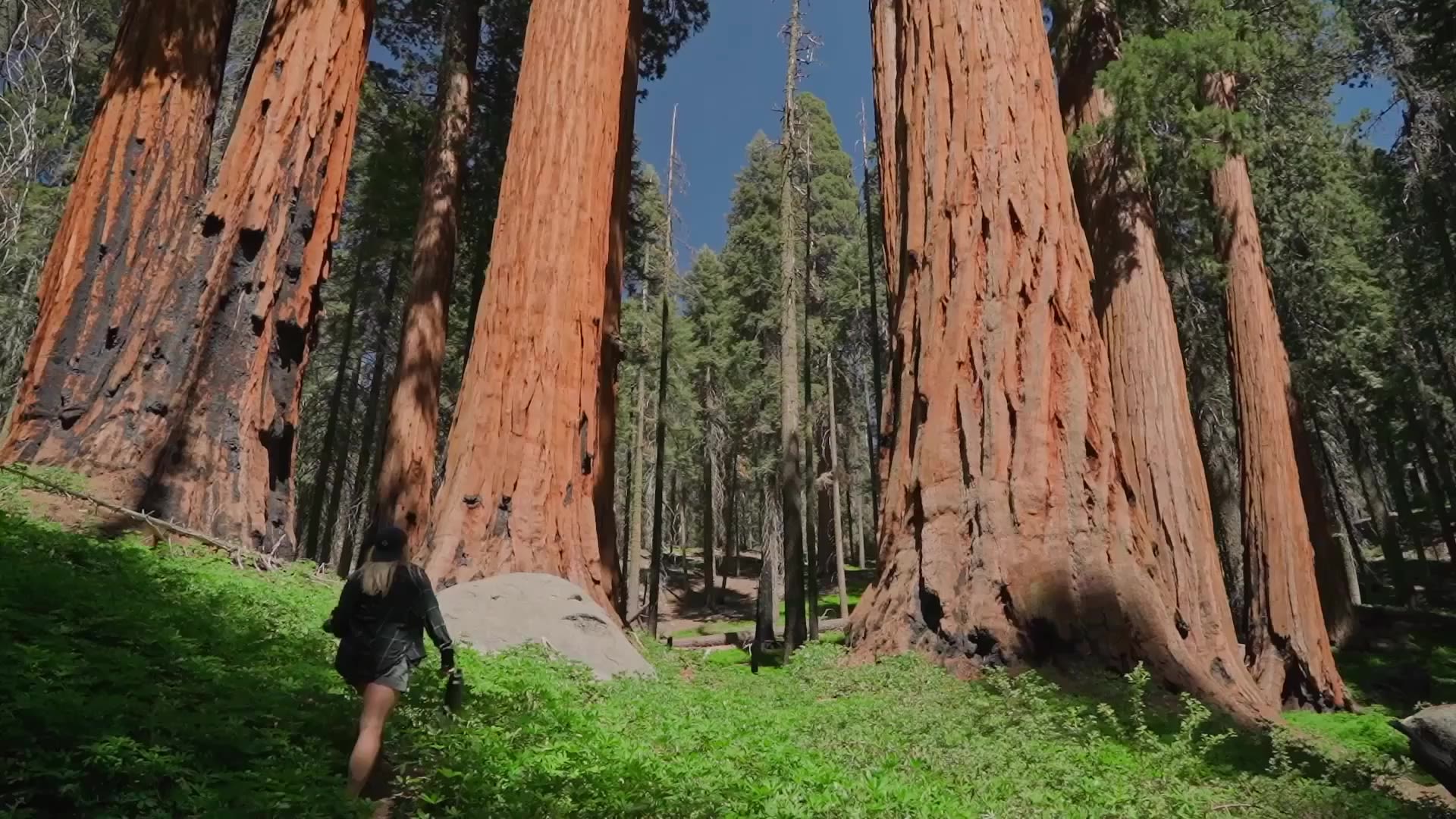
During America’s 250th year, a surprising number of older trees can be counted as witnesses to the nation’s journey. They grow in urban New York, rural California and all places in between.
Five iconic trees have particularly interesting stories, and a few have roots older than the republic’s.
Revolutionary Witness
The Pawling Sycamore
This living landmark is rooted in the founding era and symbolizes the long memory of a nation.
Pawling sycamore (National Park Service)
Pawling sycamore (National Park Service)
During the Revolutionary War, in December 1777, General George Washington established a winter encampment for his troops at Valley Forge, Pennsylvania. Their wintertime base camp kept them from starvation and gave them space and time to develop battle plans critical to defeating the British.
George Washington on horseback at Valley Forge (Library of Congress/E. Percy Moran)
George Washington on horseback at Valley Forge (Library of Congress/E. Percy Moran)
The Pawling sycamore, a broad tree named after the colonial-era owners of the property, still stands at the site. (Other nearby trees fell during the war or were cut for lumber.)
The Pawling sycamore is one reminder of the men who camped nearby, risking their lives in pursuit of freedom
Scott Wade, a Valley Forge arborist and the descendant of a Revolutionary Army quartermaster, explains that the sycamore’s location has helped its longevity. Wade says colonial architecture typically featured living quarters near two other important components, a tree like this one, for shade, and a water source such as the nearby spring.
Wade is sure that the Pawling sycamore was planted during the colonial times.
Since then, its roots have had a constant water supply from the spring, still protected by a structure called a springhouse.
The tree has had ample space to spread outward, keeping it from the tall, skinny shape of a sycamore growing in a forest.
Wade calls the Pawling sycamore a “witness tree” for having thrived during the nation’s entire history.
Although 2 million people visit Valley Forge annually, the tree suffers little interference and flourishes in a private area where neither foot traffic nor vehicles harm its root system or water source.
Pawling sycamore (National Park Service/Beth Dhunjisha)
Pawling sycamore (National Park Service/Beth Dhunjisha)
For nearly three centuries, the tree has remained healthy.
Survival and Renewal
The 9/11 Survivor Tree
Pulled from the rubble and nursed back to life, a Callery pear became a symbol of resilience.
The survivor tree in bloom (Courtesy of the 9/11 Memorial & Museum/Jin Sup Lee)
The survivor tree in bloom (Courtesy of the 9/11 Memorial & Museum/Jin Sup Lee)
At the 9/11 Memorial & Museum in New York City, the “survivor tree” presents its own small miracle.
A quarter century ago, following the terrorist attacks, remnants of an 8-foot Callery pear tree were pulled from smoldering debris. The tree was broken and burned.
A man stands in the rubble after the collapse of the World Trade Center in New York September 11, 2001. (© Doug Kanter/AFP/Getty Images)
A man stands in the rubble after the collapse of the World Trade Center in New York September 11, 2001. (© Doug Kanter/AFP/Getty Images)
While rescue workers were focused on finding any surviving human in a seven-story debris pile in the first days following the September 11 attack, it was a few weeks in — when city officials called for “all-hands-on-deck” for a cleanup — that the Callery pear tree was discovered by a landscape architect.
He was impressed that the charred pear tree was sprouting green leaves, as if it were springtime.
He and other city workers waited until just before a scheduled demolition of that section of rubble to whisk in, uproot the tree, load it on to a truck and take it to a place where they could tend to it.
On November 9, 2001, workers unloaded the gnarled pear tree at Van Cortland Park, pruned it and planted it in a deep pit with special nutrients.
By spring, the tree was doing better, though it still had office-window glass embedded in its bark.
After nine years of careful care, the city parks workers planted the tree at the National September 11 Memorial & Museum site, near its original location, where it grows today.
Most pear trees have a 25-year lifespan, but this one has survived 55 years. Among the plantings at the site, this tree is the first to bloom each spring. It is the last to shed its leaves each fall.
A metal barrier covered with notes of support and remembrance surrounds the tree.
Family members who lost loved ones on September 11, 2001, pause at the survivor tree. (© Aaron Showalter/Getty Images)
Family members who lost loved ones on September 11, 2001, pause at the survivor tree. (© Aaron Showalter/Getty Images)
The survivor tree (center) in fall 2014 (Courtesy of the 9/11 Memorial & Museum/Jin Sup Lee)
The survivor tree (center) in fall 2014 (Courtesy of the 9/11 Memorial & Museum/Jin Sup Lee)
For many years, the National September 11 Memorial & Museum gave seedlings from the survivor tree to other communities struck by terrorism or natural disasters.
Living Diplomacy
The Capital Cherry Trees
A gift of friendship transformed Washington’s landscape and created one of the city’s most enduring rituals.
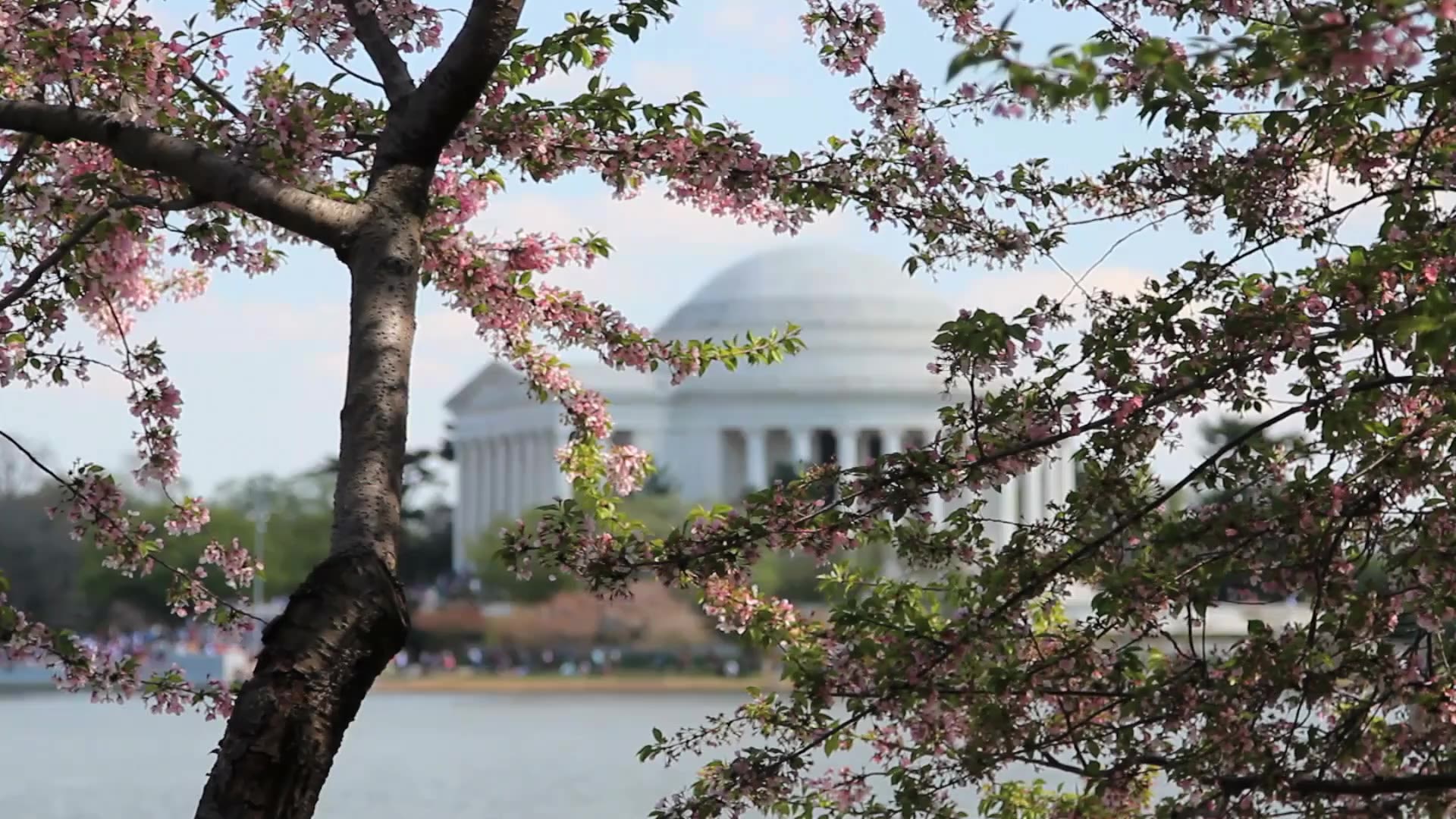
Cherry trees bloom with a backdrop of the Jefferson Memorial. (@ Storyblocks)
Cherry trees bloom with a backdrop of the Jefferson Memorial. (@ Storyblocks)
Over 3,000 cherry trees in Washington, given to the people of the United States by Japan in 1912, symbolize peace and friendship in the nation’s capital. Their annual springtime bloom begins a national ritual that draws over a million admirers each year to celebrate the season and the U.S.-Japan relationship.
Japanese Ambassador M. Katsuji Debuchi and his family walk among the cherry blossoms around the Tidal Basin March 30, 1929. (© NY Daily News/Getty Images)
Japanese Ambassador M. Katsuji Debuchi and his family walk among the cherry blossoms around the Tidal Basin March 30, 1929. (© NY Daily News/Getty Images)
They come to walk around Washington’s Tidal Basin, surrounded by these cherry trees and awash in pink and white blossoms.
The cherry trees surrounding the Tidal Basin in Washington have survived floods and disease.
Teresa Durkin, an executive with the Trust of the National Mall, says natural events and the trees’ public habitat challenge them to live beyond their 30-year life expectancy. Yet a few of the 1912 trees still thrive — thanks to the expertise of National Park Service caretakers, who protect the trees as treasures.
Marking the 100-year anniversary of Japan’s gift, the United States reciprocated in 2012 by sending Japan the first of 3,000 dogwood trees.
In 2026, Japanese Prime Minister Sanae Takaichi gave President Trump and the United States an additional 250 trees to celebrate the 250th anniversary of the Declaration of Independence. Most of the gift will fortify aging cherry trees along the Tidal Basin. Some will be kept at the National Arboretum to cultivate the Yoshino tree variety that remains key to U.S.-Japan bonds.
Today, the Tidal Basin is graced by 4,000 cherry trees. The display has been buttressed by Japan’s recent 250th birthday present and by donations by private U.S. citizens to the Cherry Tree Endowment Fund.
The trees’ beauty lives on, as does the friendship of two close allies.
Embodying the Spirit of a Region
The Angel Oak
South Carolina’s Angel Oak grew broad from farming traditions of the South and symbolizes community pride.
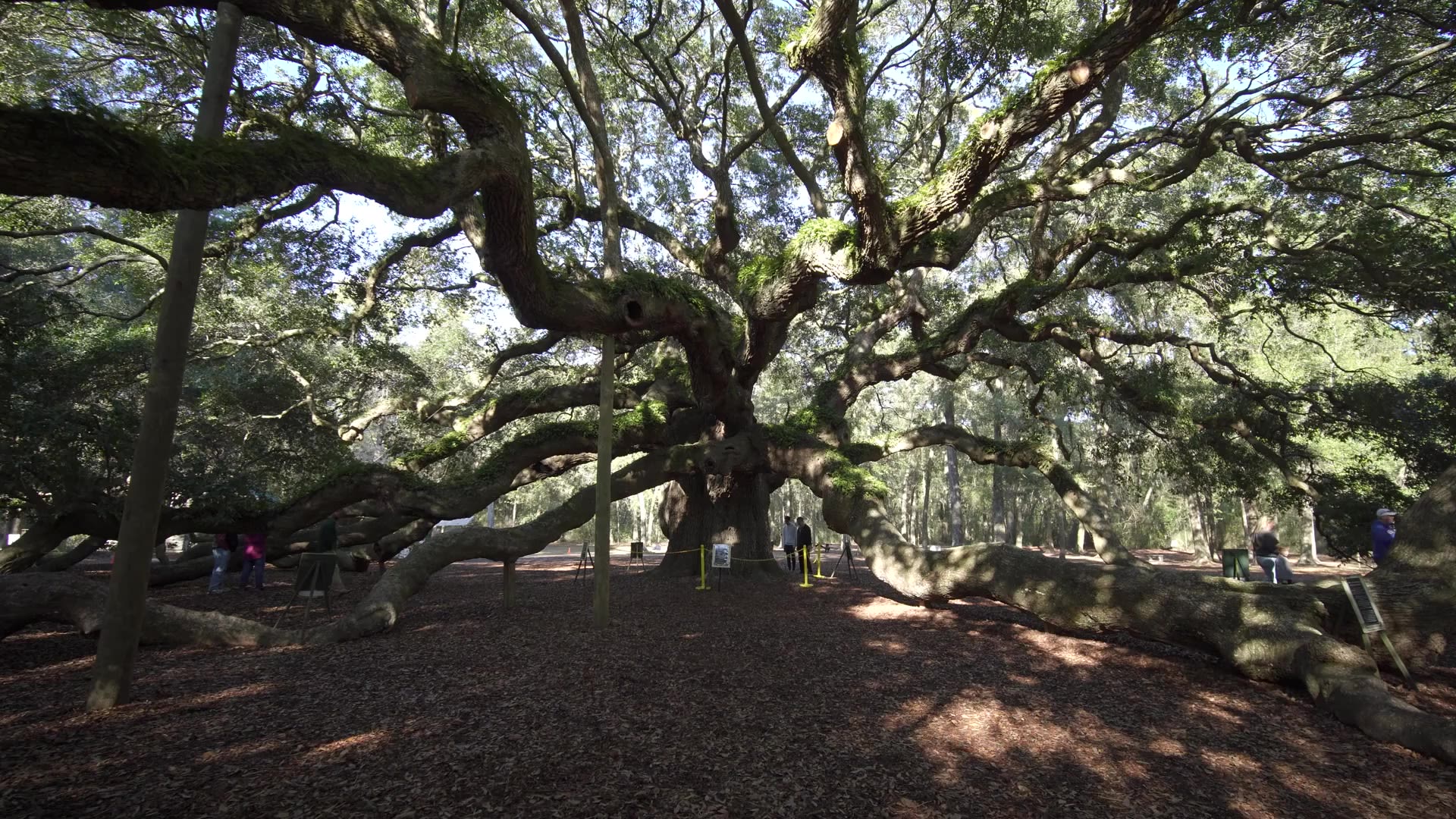
The Angel Oak is at least 400 years old, with its longest branch being 187 feet long. (@ Storyblocks)
The Angel Oak is at least 400 years old, with its longest branch being 187 feet long. (@ Storyblocks)
Few trees represent a U.S. region like the Angel Oak in Charleston, South Carolina. This sprawling, 400-year-old tree is a favorite spot for generations of visitors. (About 400,000 people visit the Angel Oak annually!)
As a Charleston tour guide, Ruth Miller has introduced thousands to the Angel Oak. The tree’s public location makes it an easy stopping place for visitors on their way to the nation’s largest tea garden on Wadmalaw Island, South Carolina. Many couples take photos here when they become engaged and then come back years later for photos with their children.
Emilia and Matt from Virginia Beach, Virginia, take wedding pictures under the Angel Oak. (© Skylar Wyatt Photography)
Emilia and Matt from Virginia Beach, Virginia, take wedding pictures under the Angel Oak. (© Skylar Wyatt Photography)
The oak’s symmetry gives it a mystique. Miller says the shape is a result of the practice of early American farmers, who cleared the areas around oak trees. This would help them develop large canopies that offered shade on hot summer days. Caretakers did this for the Angel Oak, and its access to sunlight from all directions allowed its broad limbs to fill a near-perfect circle.
By the mid-19th century, the tree had achieved fame. Frequent interaction with humans admiring the tree caused erosion until a local newspaper sounded the alarm in 1975 with an article titled “The Angel Oak ‘Overloved’.” This led to greater protections, including stewardship by the Lowcountry Land Trust, which is turning the area into a recreational area with elevated walkways to avoid damaging the Angel Oak.
Photo:
The famous Angel Oak is at least 400 years old, with a circumference of 28 feet. The tree shades an area measuring 17,200 square feet, and the longest branch is 187 feet long. (© Gerry Bishop/Adobe)
William Saunders Sr., a third-generation farmer born in the area, credits the depth and reach of the Angel Oak’s roots with making it seemingly indestructible. After a series of hurricanes devastated South Carolina in 2018, a television commercial featured the tree standing strong amid storm destruction.
Visitors hold hands around the trunk of the Angel Oak in Charleston, South Carolina, September 24, 2013. (© Randall Hill/Reuters)
Visitors hold hands around the trunk of the Angel Oak in Charleston, South Carolina, September 24, 2013. (© Randall Hill/Reuters)
In May 2026, the Angel Oak was officially listed on the National Register of Historic Places for its longevity and role as a witness to history.
Living Monument
The General Sherman Sequoia
In California’s Sierra Nevada, one giant sequoia stands as a testament to age, size and survival.
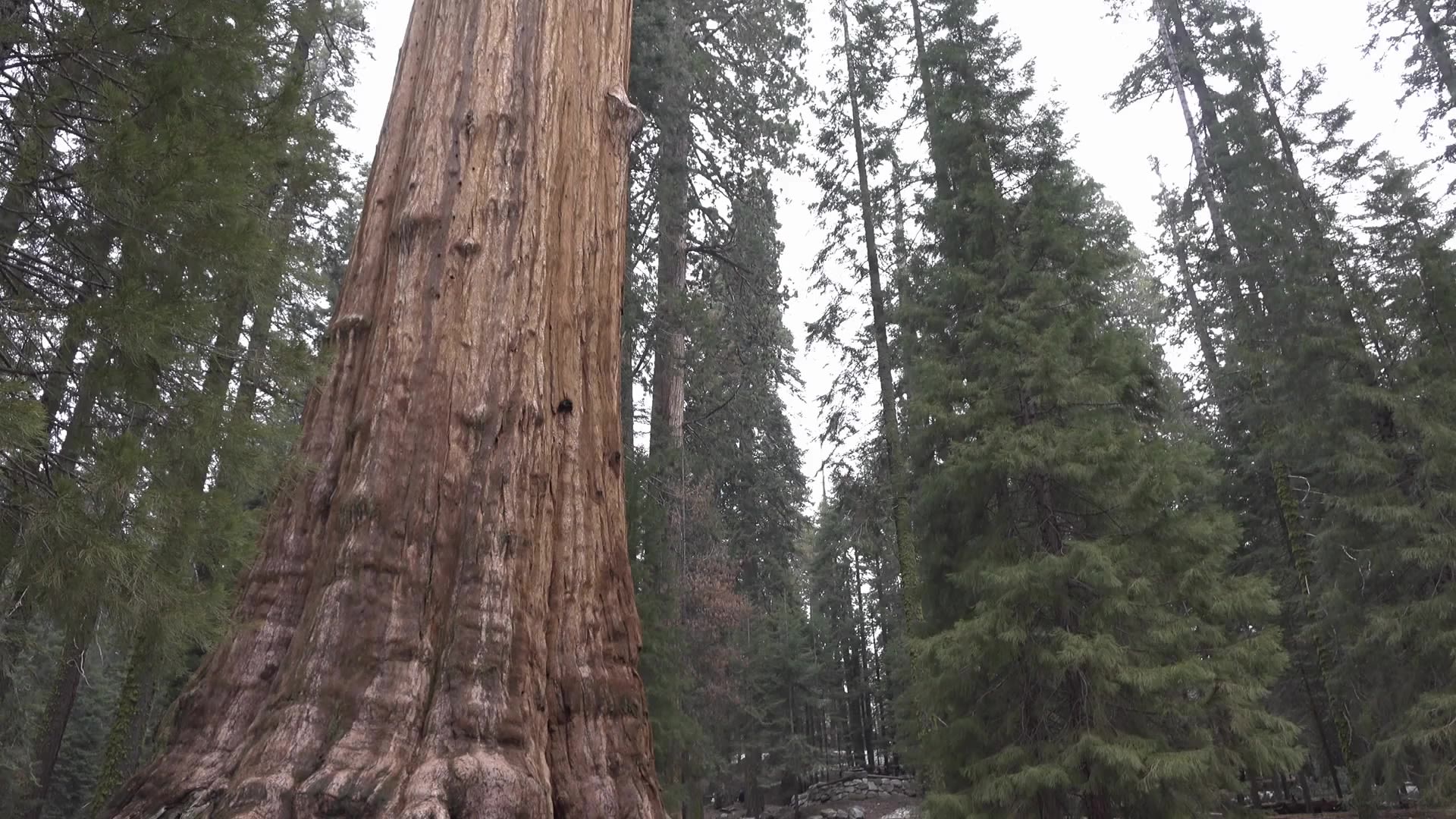
The General Sherman tree in California’s Sequoia National Park (© Storyblocks)
The General Sherman tree in California’s Sequoia National Park (© Storyblocks)
Sequoia National Park — the home of the largest and oldest trees in the world, giant sequoias — symbolizes tranquil strength. In 1879, explorer and soldier James Wolverton named one tree here after his Union Army Civil War commanding officer, General William Sherman.
Early visitors to the General Sherman sequoia pose in a horse-drawn cart in this undated photo. (National Park Service)
Early visitors to the General Sherman sequoia pose in a horse-drawn cart in this undated photo. (National Park Service)
The General Sherman tree stands 25 stories high and has mass of 2.7 million pounds, making it the largest tree in the world. The tree is wide enough to cover three lanes of an interstate highway. Visitors often feel humbled by the tree’s size and marvel at the serene setting.
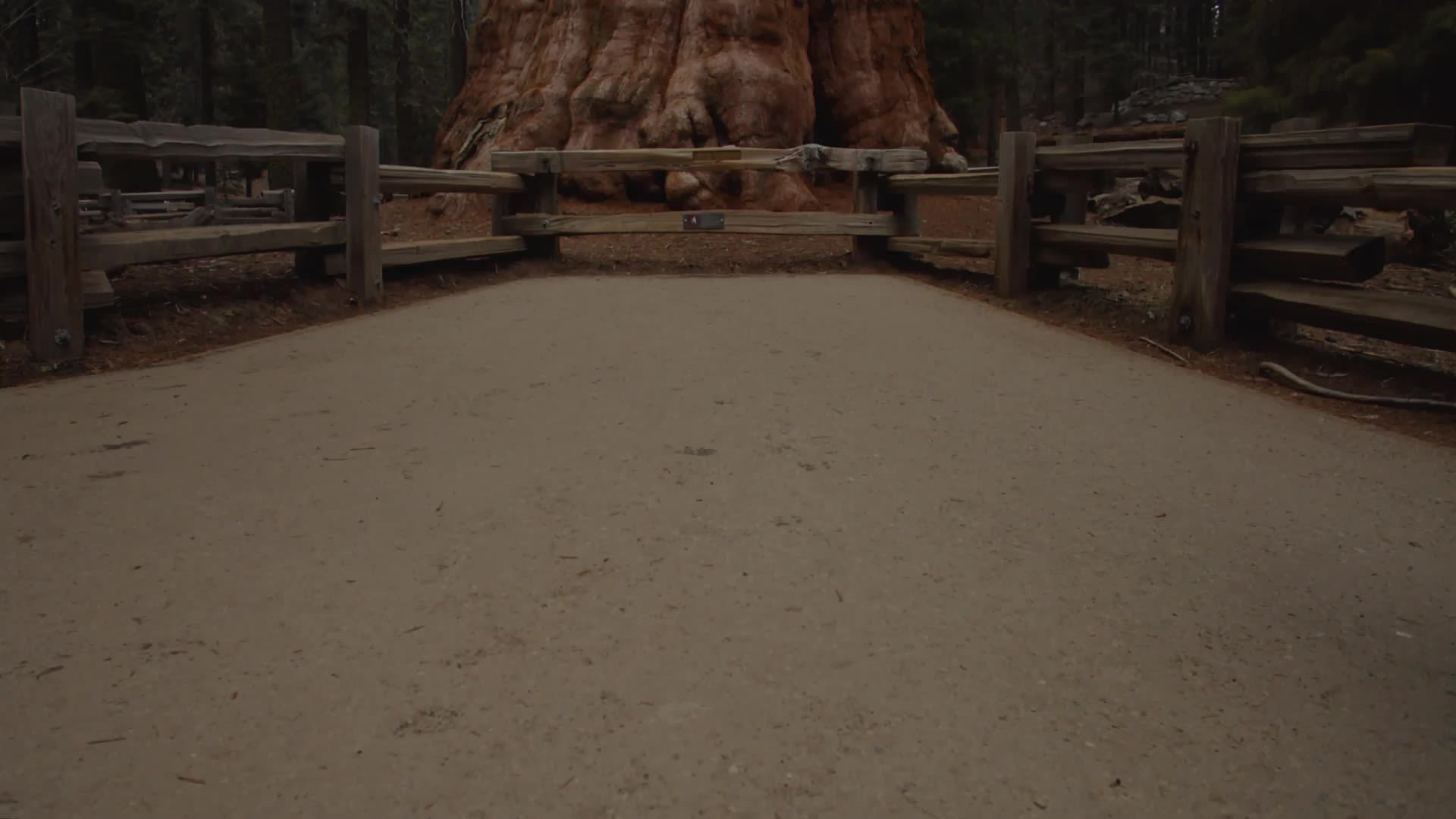
A woman approaches the General Sherman sequoia in Sequoia National Park. (@ Storyblocks)
A woman approaches the General Sherman sequoia in Sequoia National Park. (@ Storyblocks)
The General Sherman tree is an estimated 2,200 years old. William Tweed, a former park ranger who has authored books on giant sequoias, says it is hard for humans to grasp sequoia lifespans, which are measured in millennia.
Tweed says it was customary for 19th-century explorers to name a large tree like the Sherman to help them find their way.
Sequoias require periodic, low-intensity fire for seed reproduction.
Fire scars mark the Sherman sequoia’s base. Its bark is structured to withstand modest fires, which help prevent larger, potentially catastrophic burns. And flames can clear the way for new seedlings that become giants over time.
Conifers dropping from towering heights fuel rebirth of sequoia forests.
The Arrowhead Hotshots conduct a tactical burn operation on the edge of the Giant Forest in 2021. (National Park Service/Thomas Chavez)
(©U.S. National Park Service)
Tweed believes giant sequoias show the nation’s commitment to preserving natural resources as outlined in the 1916 National Park Service legislation.
Throughout the latter half of its 250-year history, America has developed 63 national parks with an expansive system of park rangers who all don uniforms that feature sequoia conifers on their hats and belts. Rangers have protected the Sherman and hundreds of other sequoias, all national treasures.
Hiker in Sequoia National Park (© Maygutyak/Adobe)
Hiker in Sequoia National Park (© Maygutyak/Adobe)
From a Revolutionary-era sycamore tree surviving in solitude to a pear tree with a double lifespan despite a terrorist attack, these trees have helped bring people together.
For some of these iconic trees, 250 years of American history is but one short chapter in a long story of resilience and rebirth.
In coming years, new natural wonders will emerge across the American landscape to delight its people.
Pawling sycamore (National Park Service)
Pawling sycamore (National Park Service)
The Survivor Tree (center) (Courtesy of the 9/11 Memorial & Museum, Jin Sup Lee)
The Survivor Tree (center) (Courtesy of the 9/11 Memorial & Museum, Jin Sup Lee)
Cherry Blossoms near the Thomas Jefferson Memorial (© Adobe)
Cherry Blossoms near the Thomas Jefferson Memorial (© Adobe)
The Angel Oak (© Gerry Bishop/Adobe)
The Angel Oak (© Gerry Bishop/Adobe)
Sequoia National Park (© Maygutyak/Adobe)
Sequoia National Park (© Maygutyak/Adobe)
Writer: Brandon Lambert
Photo editor: Evan Eile
Production editor: Kathleen Hendrix
Digital storyteller: Pierce McManus
August 2026
More digital stories from the U.S. Department of State
This site is managed by the Bureau of Global Public Affairs within the U.S. Department of State. External links to other internet sites should not be construed as an endorsement of the views or privacy policies contained therein.