
AMERICAN
ARCHITECTURE
Whether designing a front porch on a farmhouse or a skyscraper in a big city, American architects express the ambitions of a nation.
Their designs are “attempting to provide built form to the ideals of democracy,” says Peter MacKeith, an architectural educator who curated the American pavilion at the 2025 Venice Architecture Biennale. (The State Department provides grant funding for it each year.)

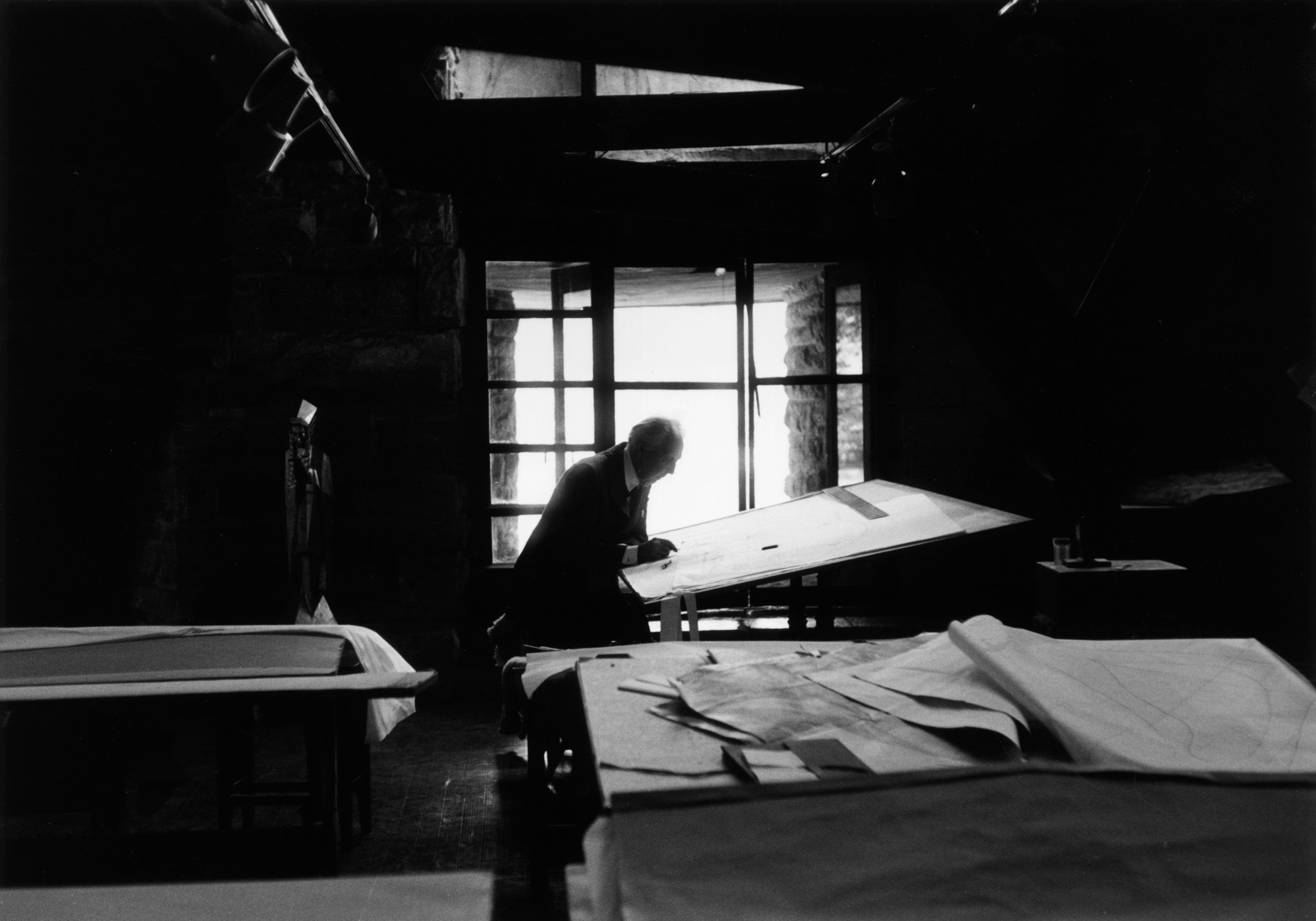
Architects, such as Frank Lloyd Wright at his drafting table in 1957, helped turn American ambition into artful designs. (© Tony Vaccaro/Hulton Archive/Getty Images)
Architects, such as Frank Lloyd Wright at his drafting table in 1957, helped turn American ambition into artful designs. (© Tony Vaccaro/Hulton Archive/Getty Images)
Innovative architects and builders have shaped American cities and neighborhoods for 250 years, solving practical problems while imagining how Americans live together, raise families and work. Take a look.
THE FRONT PORCH
Where Private Space Meets Public Life
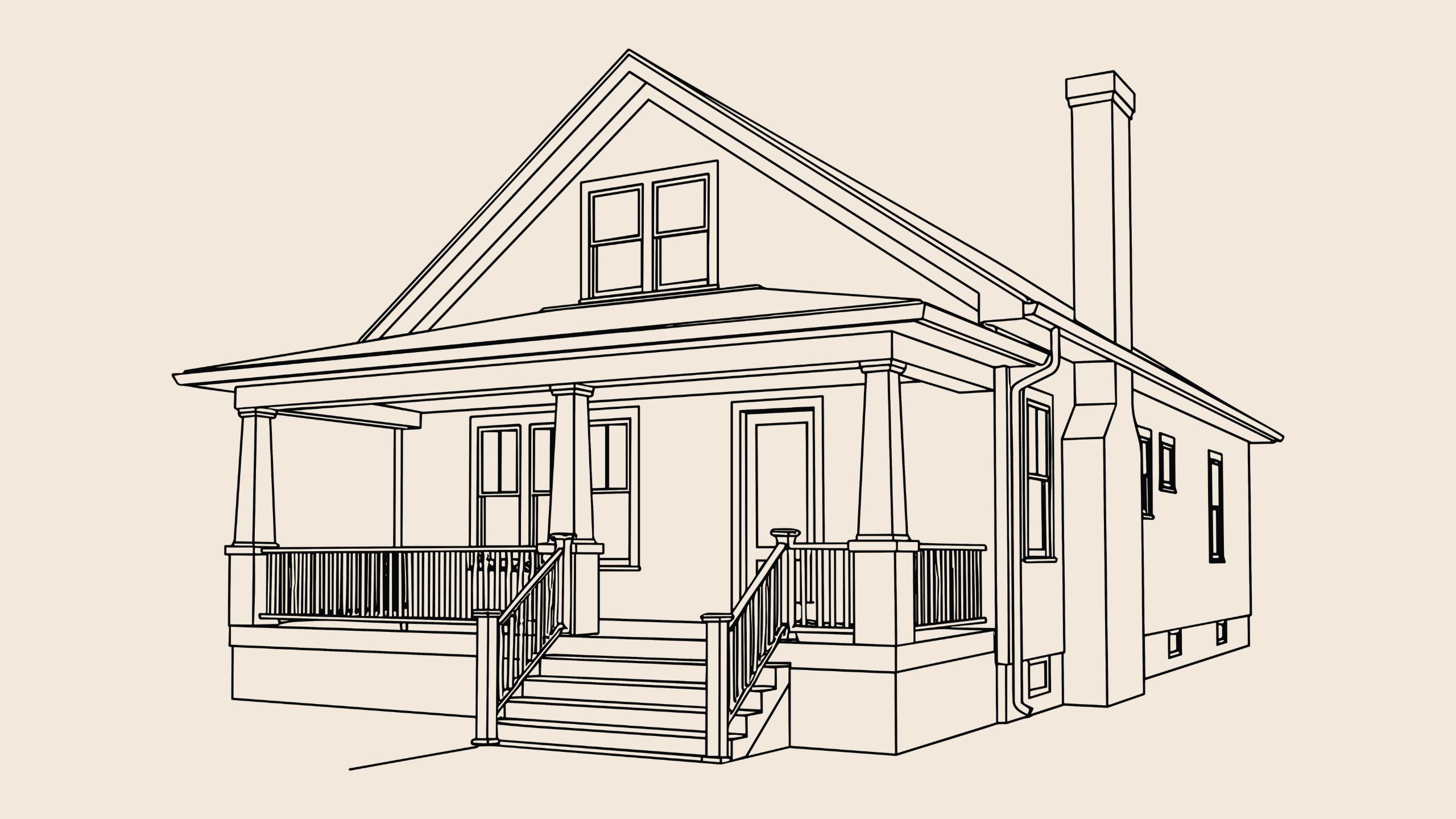
The American front porch is a place for conversations — where neighbors pause to chat during an evening walk, friends gather for a casual meal or children play on hot summer days.
At its best, says MacKeith, the front porch embodies “openness, hospitality, welcoming generosity, dialogue, engagement, performance and cultural expression, all bound up in what seems to be a very simple, constructed space at the front door of your home.”

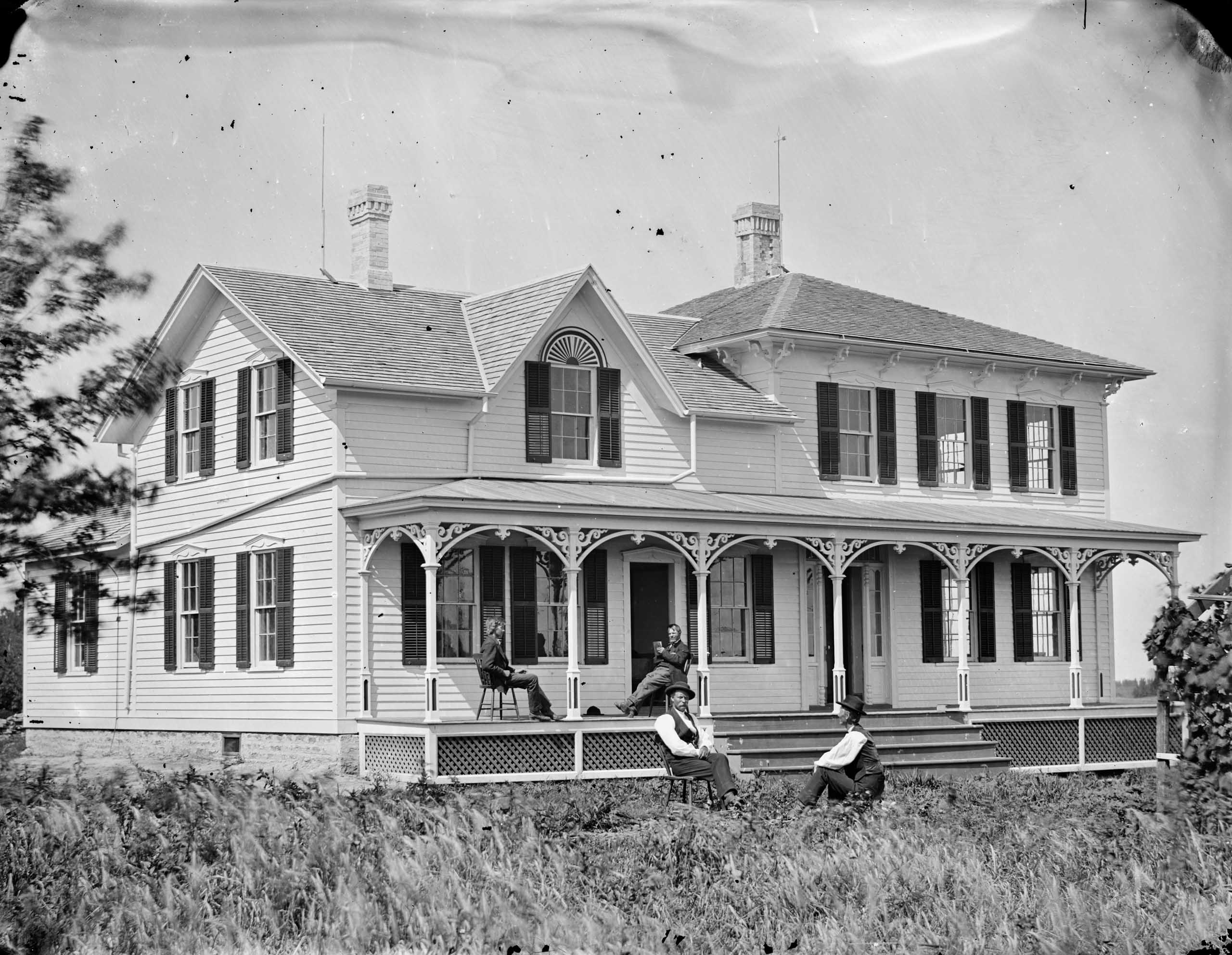
In 19th-century America, the porch became a transitional space where domestic life met the wider world, as seen on this rural Wisconsin home in 1872. (© Andreas Larsen Dahl/Wisconsin Historical Society/Getty Images)
In 19th-century America, the porch became a transitional space where domestic life met the wider world, as seen on this rural Wisconsin home in 1872. (© Andreas Larsen Dahl/Wisconsin Historical Society/Getty Images)
Many cultures — European, Southeast Asian and African — have variations on the design, from modest stoops to grand verandas. U.S. builders in Southern states began to add them to homes to regulate the temperature, offering residents a place to escape a stuffy interior on hot, humid days.
Over time, the porch evolved into something distinctly American. Early 19th-century American architects adapted it to rural farmhouses and grand estates. By the mid-19th century, porches had become a defining feature of homes across the country, from mansions to single-room dwellings.


A child rides past a front porch in Kansas City in 1975 as people gather behind him. (National Archives/Environmental Protection Agency/Kenneth Paik)
A child rides past a front porch in Kansas City in 1975 as people gather behind him. (National Archives/Environmental Protection Agency/Kenneth Paik)
The porch even became a central setting in classic 20th-century American literature, such as Harper Lee’s To Kill a Mockingbird and Zora Neale Hurston’s Their Eyes Were Watching God.
“It was the time for sitting on porches beside the road. It was the time to hear things and talk.”
— Zora Neale Hurston, Author Their Eyes Were Watching God
“It is part of who we are as a nation,” MacKeith says. “It’s part of our way of expressing ourselves to each other in this generous, dignified, creative place.”

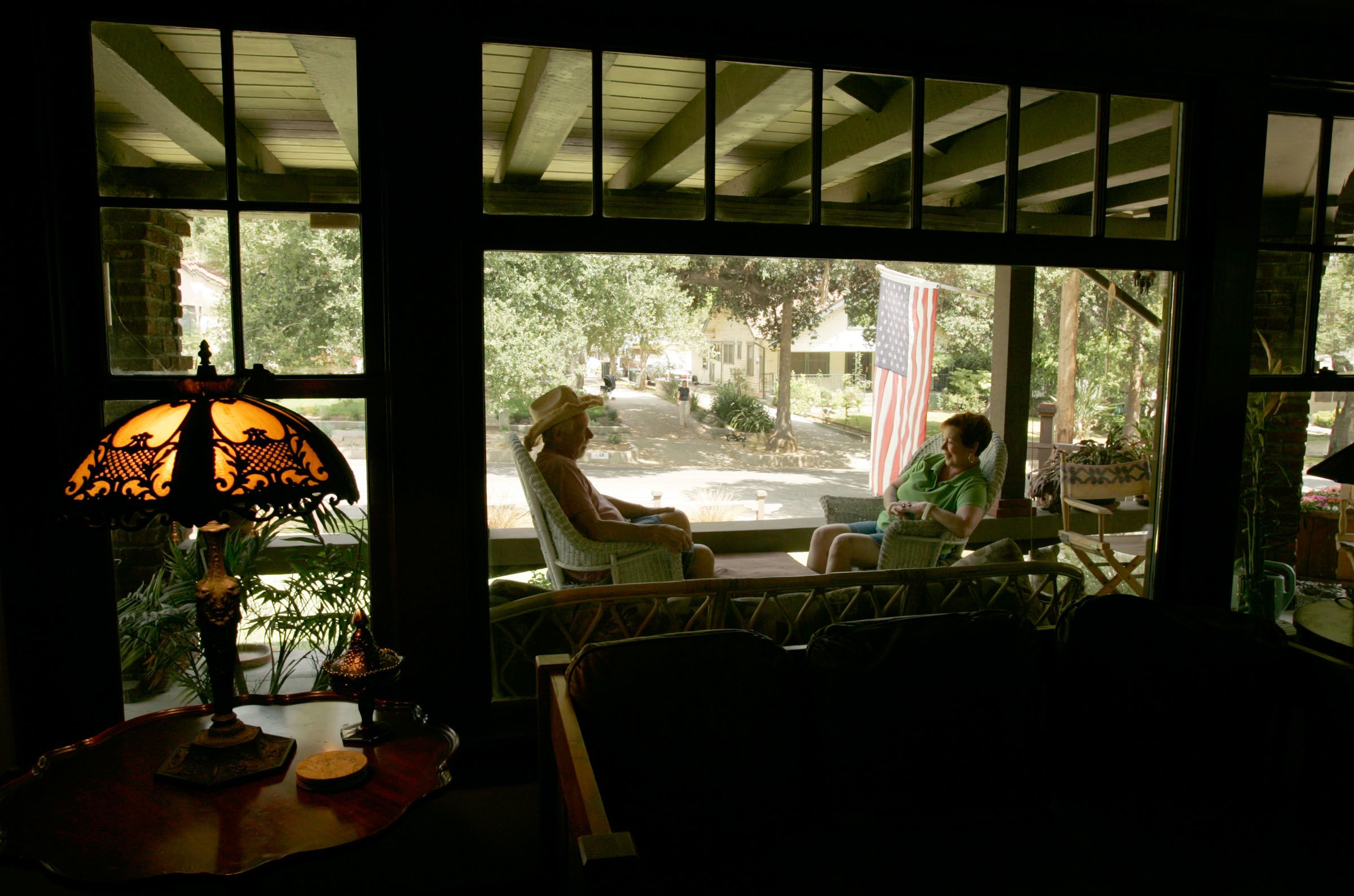
Homeowners seated on the front porch of their 1915 bungalow honor a tradition that has endured for generations: lingering and observing neighborhood life. (© Mark Boster/Los Angeles Times/Getty Images)
Homeowners seated on the front porch of their 1915 bungalow honor a tradition that has endured for generations: lingering and observing neighborhood life. (© Mark Boster/Los Angeles Times/Getty Images)
THE SUBURBS
Neighborhoods by Design
In the years following World War II, American architects designed a new type of home — located in neighborhoods that are neither rural nor urban. The 1950s brought a spike in middle-class jobs, and the suburb met people’s daily needs, which in turn helped the economy.

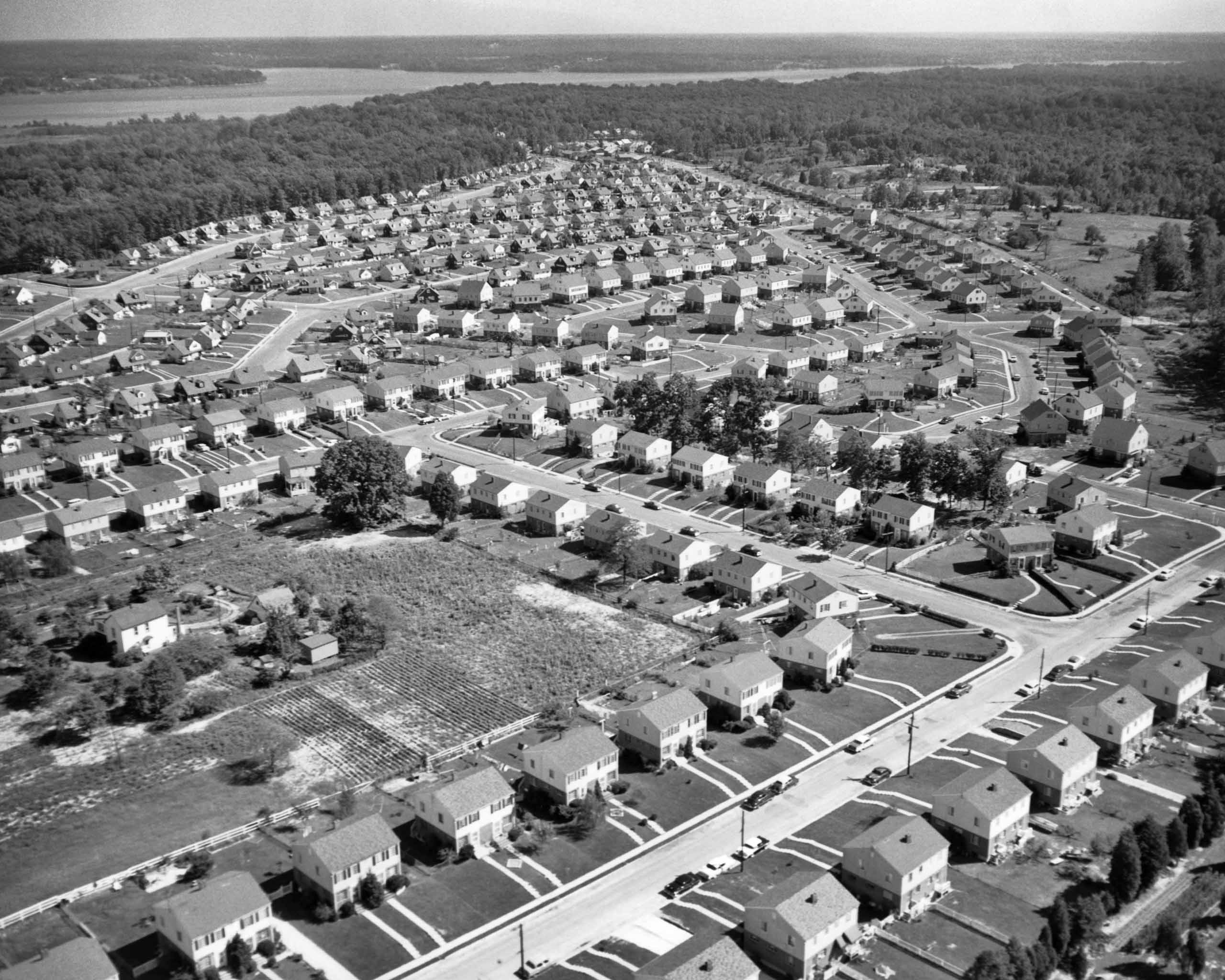
A postwar housing development in Alexandria, Virginia, shows the ordered geometry of the American suburb, which met the daily needs of a growing middle class. (© Heilman/Classicstock/Getty Images)
A postwar housing development in Alexandria, Virginia, shows the ordered geometry of the American suburb, which met the daily needs of a growing middle class. (© Heilman/Classicstock/Getty Images)
Living in the suburbs allowed members of the middle class to own their homes. It became a way for them to strike out on their own, reflecting an American pioneering spirit.
“America is a nation of houses,” says MacKeith. “That seems to be the ideal for everyone: to have their own home.” The suburbs are a practical solution to the American dream — a way for people to claim land, even a modest quarter acre, and own a house.

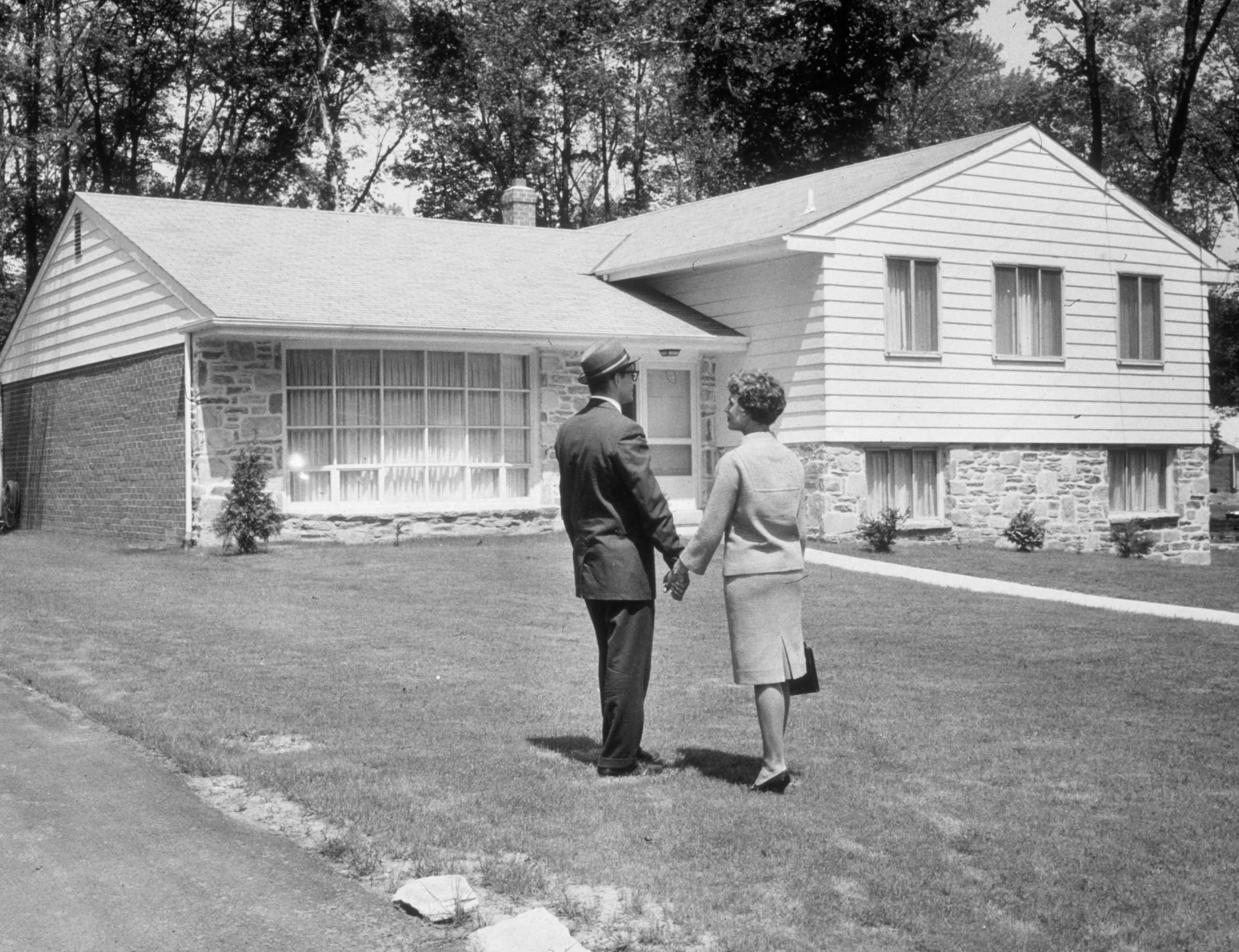
A couple and their suburban home, circa 1955, enjoy the American dream of homeownership. (© Harold M. Lambert/Getty Images)
A couple and their suburban home, circa 1955, enjoy the American dream of homeownership. (© Harold M. Lambert/Getty Images)
Homeownership created economic stability and fueled the postwar baby boom. Steady employment and rising wages allowed many suburbanites to buy cars and commute to job centers in nearby cities. Children formed friendships, and families built lasting ties with neighbors.

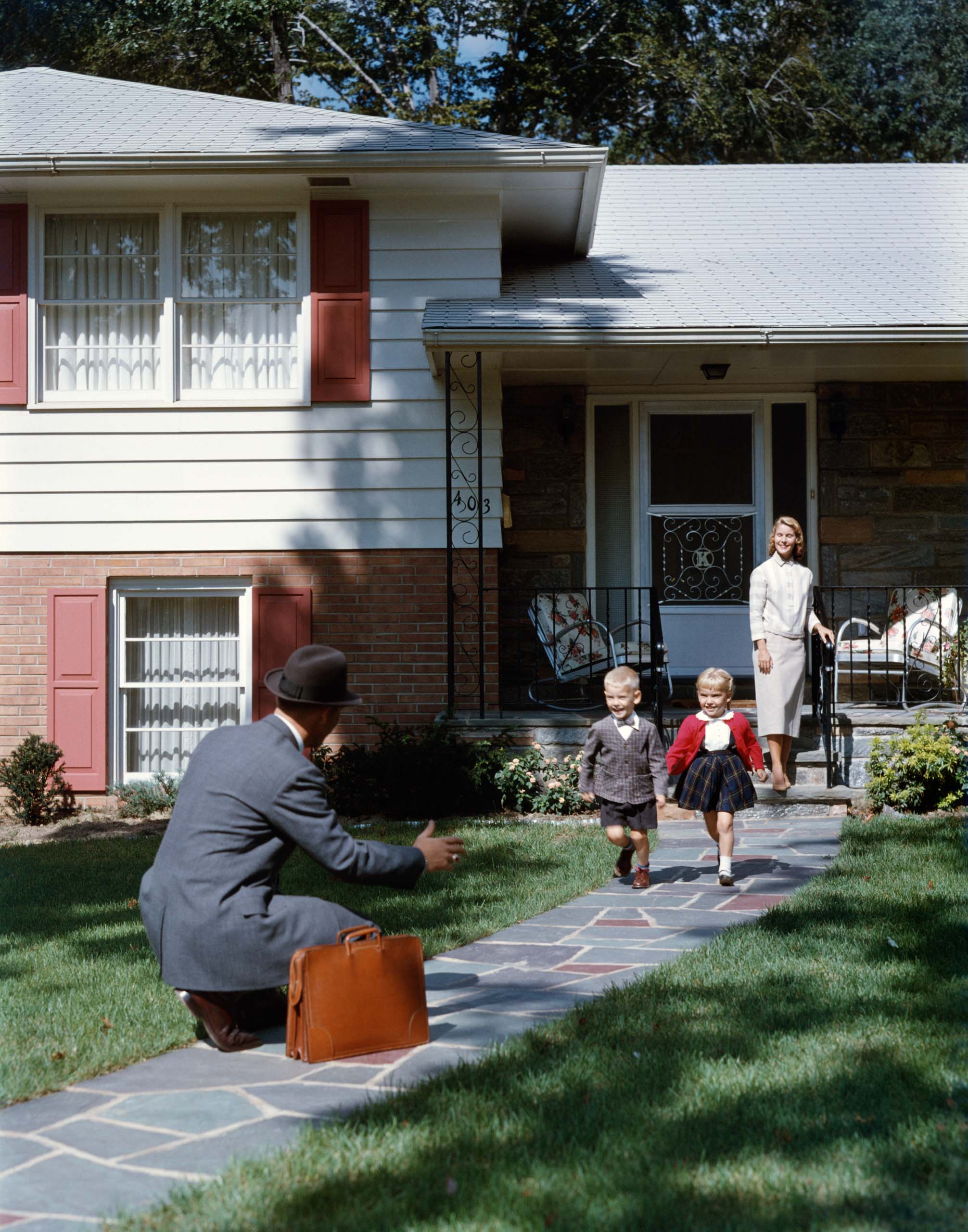
In a 1950s suburb, a father returns home from work as his children run to greet him. (© H. Armstrong Roberts/ClassicStock/Getty Images)
In a 1950s suburb, a father returns home from work as his children run to greet him. (© H. Armstrong Roberts/ClassicStock/Getty Images)
“... no great town can long exist without great suburbs.”
— Frederick L. Olmsted, Landscape Architect
Today, suburbs are America’s fastest-growing communities. More than half of Americans live in them. And the suburbs are evolving yet again as more homeowners build accessory dwelling units, or ADUs, on their properties to support multigenerational families. An estimated 1.6 million ADUs have been built to date.
THE FRANK LLOYD WRIGHT EFFECT
Architecture That Connects to the Land
Frank Lloyd Wright may be one of the most visionary architects of the modern era. Influenced by a mentor whose post-Civil War designs aimed to unify people, many of whom had quite literally fought against their neighbors during the war, Wright strove to establish a distinctly American architectural style.
He and other architects of his time saw Americans’ affinity for the outdoors as a way to define a new aesthetic. In Wright’s case, he looked to the vast Wisconsin prairie of his childhood home for inspiration.
“The architect should place himself in an environment that conspires to develop the best there is in him.”
— Frank Lloyd Wright, Architect
Unlike Europe’s cathedrals, says Jennifer Gray, of the Taliesin Institute at the Frank Lloyd Wright Foundation, America’s defining spaces were vast, rugged landscapes — places such as Yosemite National Park.

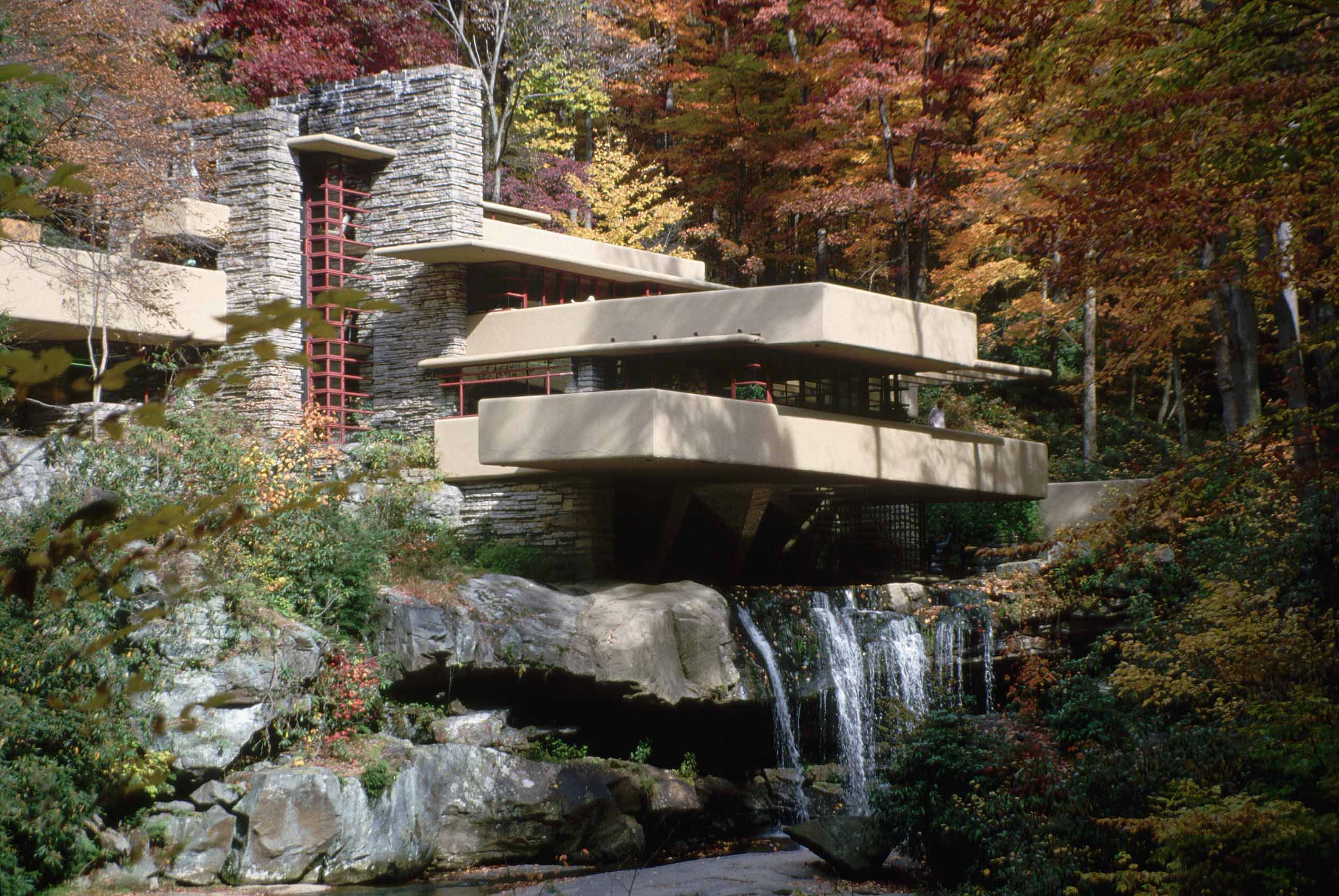
Fallingwater in rural Pennsylvania embodies Wright’s belief that architecture should integrate nature, such as stone, water and the surrounding forest. (© Richard A. Cooke/Corbis/Getty Images)
Fallingwater in rural Pennsylvania embodies Wright’s belief that architecture should integrate nature, such as stone, water and the surrounding forest. (© Richard A. Cooke/Corbis/Getty Images)
Wright’s architecture responded to nature’s grandeur. The Robie House in Chicago echoes the flat, open prairie of Illinois through horizontal lines, while Fallingwater in rural Pennsylvania integrates a waterfall into the home’s structure to blur the boundary between building and nature.
Wright was as concerned about the expression of democracy in architecture as he was about nature. His Usonian designs — proposals for affordable, self-sufficient homes and communities — brought high-end architecture within reach of everyday people.

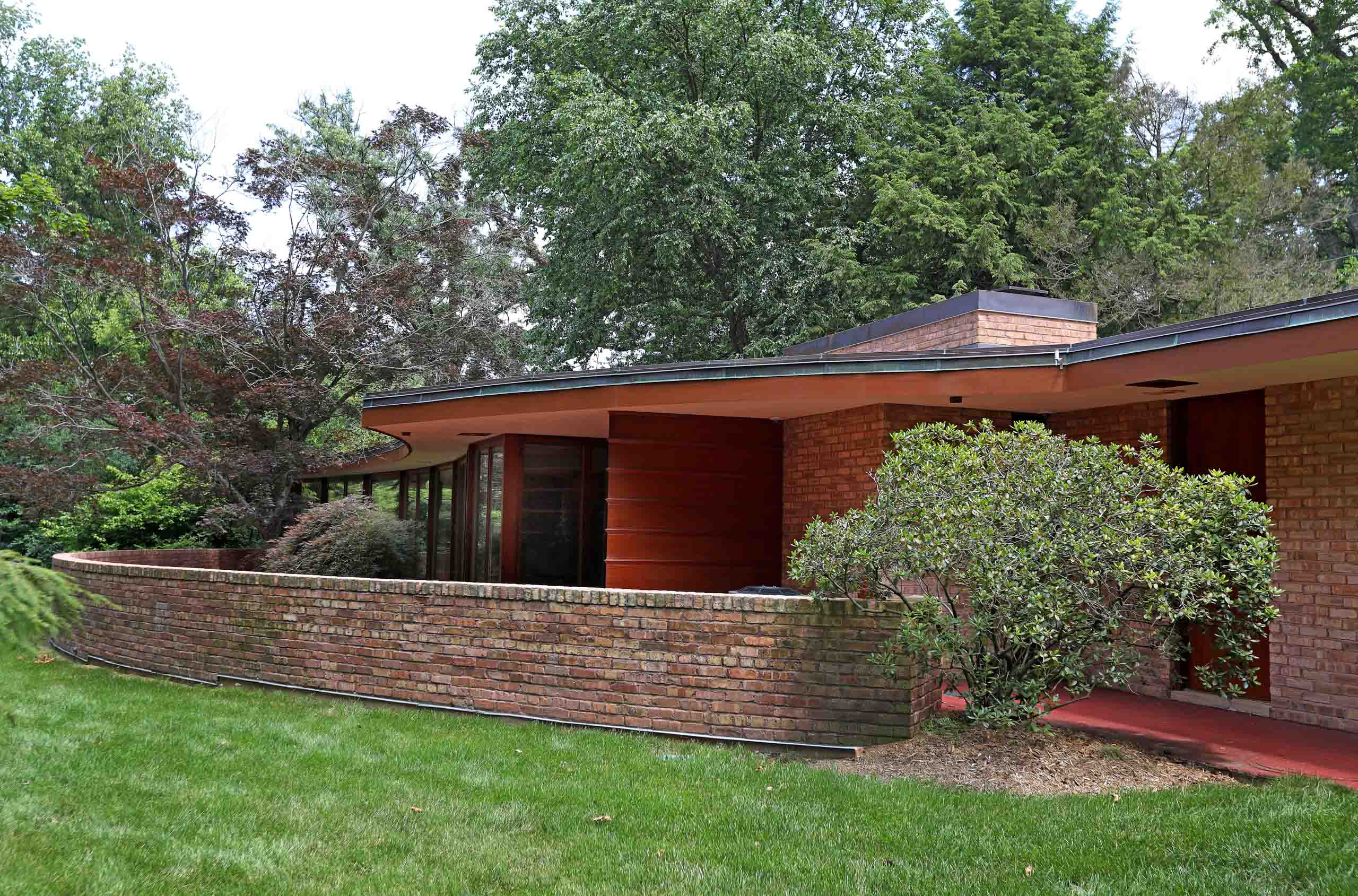
The Kenneth and Phyllis Laurent House in Rockford, Illinois, completed in 1952, embodies the Usonian ideal of accessible, human-centered design. (© Raymond Boyd/Getty Images)
The Kenneth and Phyllis Laurent House in Rockford, Illinois, completed in 1952, embodies the Usonian ideal of accessible, human-centered design. (© Raymond Boyd/Getty Images)
The Muirhead Farmhouse, for example, reflects Wright’s desire to house the “yeoman of America whom he idealized so much,” says MacKeith. Wright’s designs influenced other architects who built early suburban communities such as Levittown in Pennsylvania, one of the country’s first pre-planned housing developments.

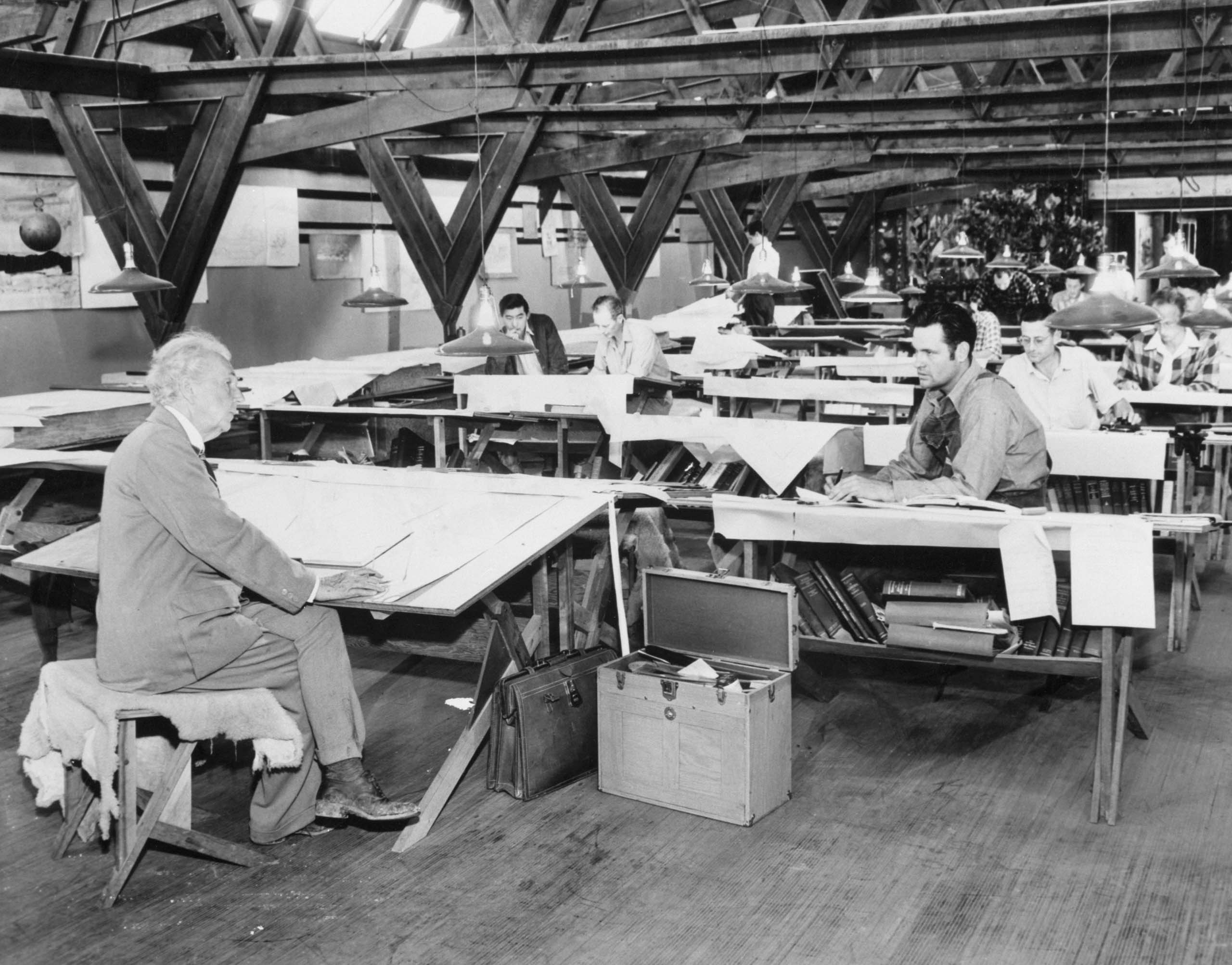
Wright reviews plans with apprentices, advancing an architecture rooted in craft and a democratic design. (© Bettmann/Getty Images)
Wright reviews plans with apprentices, advancing an architecture rooted in craft and a democratic design. (© Bettmann/Getty Images)
Over the course of his career, Wright designed 1,000 houses in the United States and abroad. Today, “any American architect is always in some form of dialogue with Frank Lloyd Wright,” says MacKeith. “It is almost impossible not to be.”
THE SKYSCRAPER
The Height of Innovation
In American cities, iconic skyscrapers form recognizable skylines. The skyscraper emerged from a multitude of American advances, including the elevator, reinforced concrete, structural steel and plate glass, all of which made vertical construction possible.

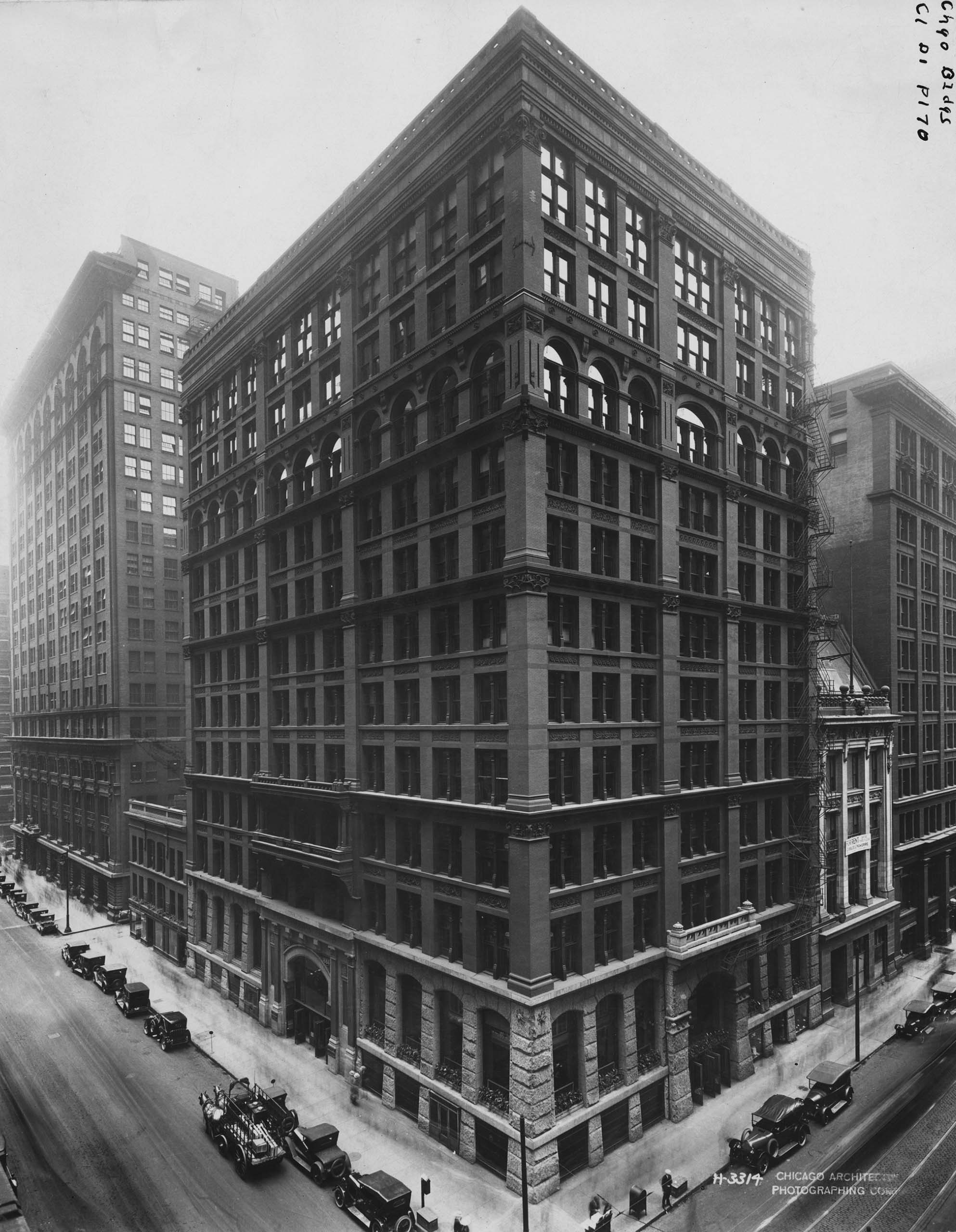
The Home Insurance Building in Chicago, completed in 1885 and shown here in 1926, is known as the world’s first skyscraper. (© Chicago History Museum/Getty Images)
The Home Insurance Building in Chicago, completed in 1885 and shown here in 1926, is known as the world’s first skyscraper. (© Chicago History Museum/Getty Images)
Chicago is where the earliest skyscrapers were built. Their genesis came after 1871, when a fire destroyed much of the city. Architects proposed a tall, fireproof building for the headquarters of a notable local company. The resulting Home Insurance Building in Chicago is widely considered the world’s first skyscraper.
“By day the skyscraper looms in the smoke and sun and has a soul. / Prairie and valley, streets of the city, pour people into it and they mingle among its twenty floors and are poured out again back to the streets, prairies and valleys.”
— Carl Sandburg, Poet “Skyscraper”


A worker balances on the Empire State Building's steel during construction, a testament to the ingenuity that propelled American cities' creation. (National Archives/Federal Works Agency/Lewis Wickes Hine)
A worker balances on the Empire State Building's steel during construction, a testament to the ingenuity that propelled American cities' creation. (National Archives/Federal Works Agency/Lewis Wickes Hine)
U.S. architects perfected skyscraper designs during the early 20th century. One of their successes is New York’s Empire State Building, with its art deco flairs and 360-degree rooftop views. Construction crews built it in just over a year, an impressive feat considering its scale.
Similar towers soon reshaped skylines from Boston to San Francisco, meeting the housing and workplace demands of rapidly growing urban populations.


One World Trade Center rises above lower Manhattan, signaling the continued evolution of the American skyline. (© Gary Hershorn/Getty Images)
One World Trade Center rises above lower Manhattan, signaling the continued evolution of the American skyline. (© Gary Hershorn/Getty Images)
Today, America’s tallest skyscraper is One World Trade Center in New York. Rising 1,776 feet, it reflects the pinnacle of architectural ingenuity. Around the world, from Dubai to Tokyo, other countries’ architects have designed skyscrapers, drawing inspiration from America.
THE FUTURE
New building materials, such as engineered wood, are reshaping how Americans design buildings today. “Architects are committed to making [buildings] as great as possible, often with the most minimal of resources,” says MacKeith. These advances will benefit communities by creating stronger, more-durable buildings that will last for generations to come.

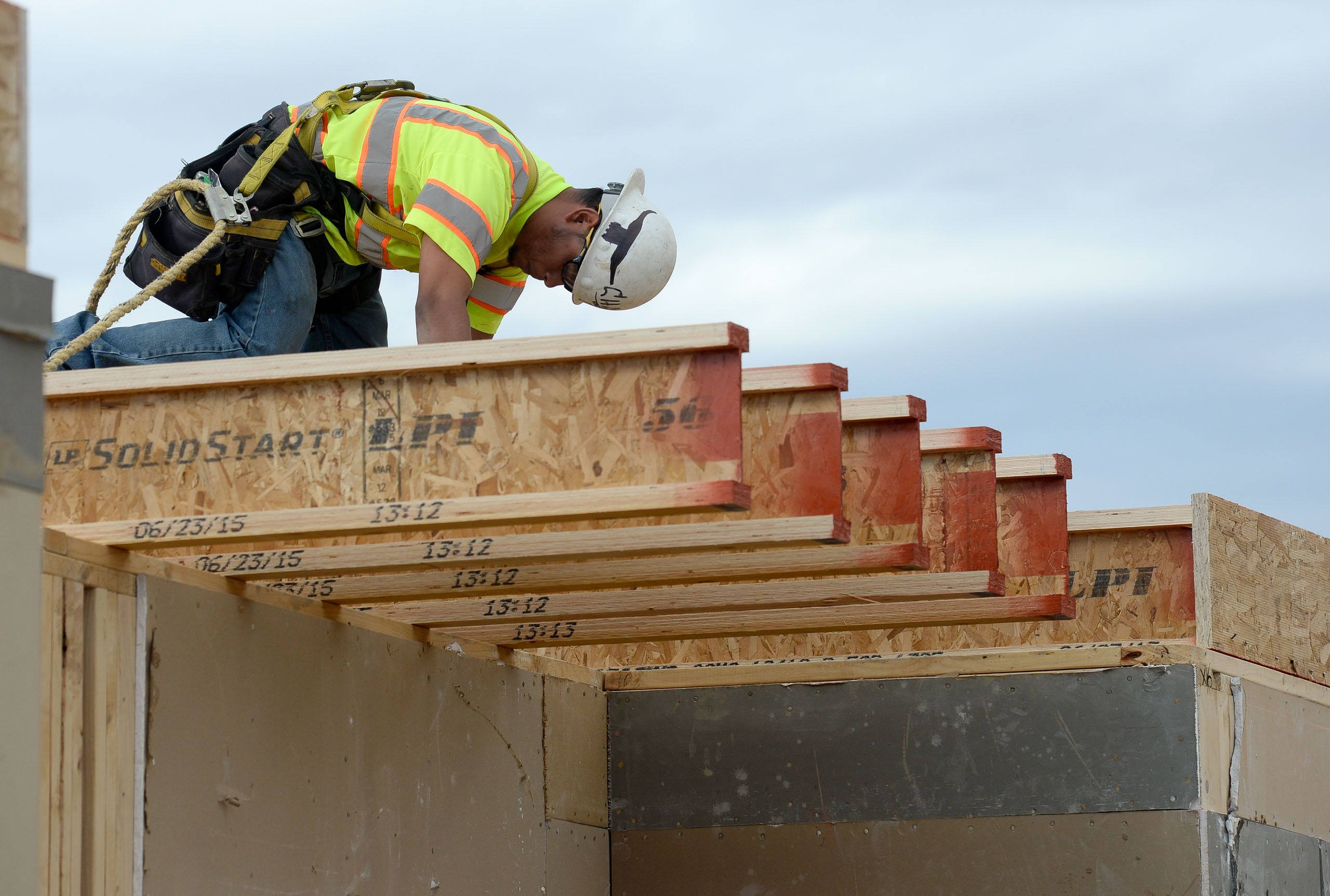
A construction worker installs engineered wood in Colorado. New materials are shaping the next generation of American buildings. (© Lewis Geyer/Digital First Media/Boulder Daily Camera/Getty Images)
A construction worker installs engineered wood in Colorado. New materials are shaping the next generation of American buildings. (© Lewis Geyer/Digital First Media/Boulder Daily Camera/Getty Images)
As the United States approaches its 250th anniversary, its architecture will continue to reflect a pioneering nation’s values: democracy, innovation and family unity.
To learn more about America ahead of the nation’s semiquincentennial, follow the State Department and the White House.
Writer: Noelani Kirschner
Photo editor: Serkan Gurbuz
Production editor: Kathleen Hendrix
Digital storyteller: Pierce McManus
February 2026
More digital stories from the U.S. Department of State